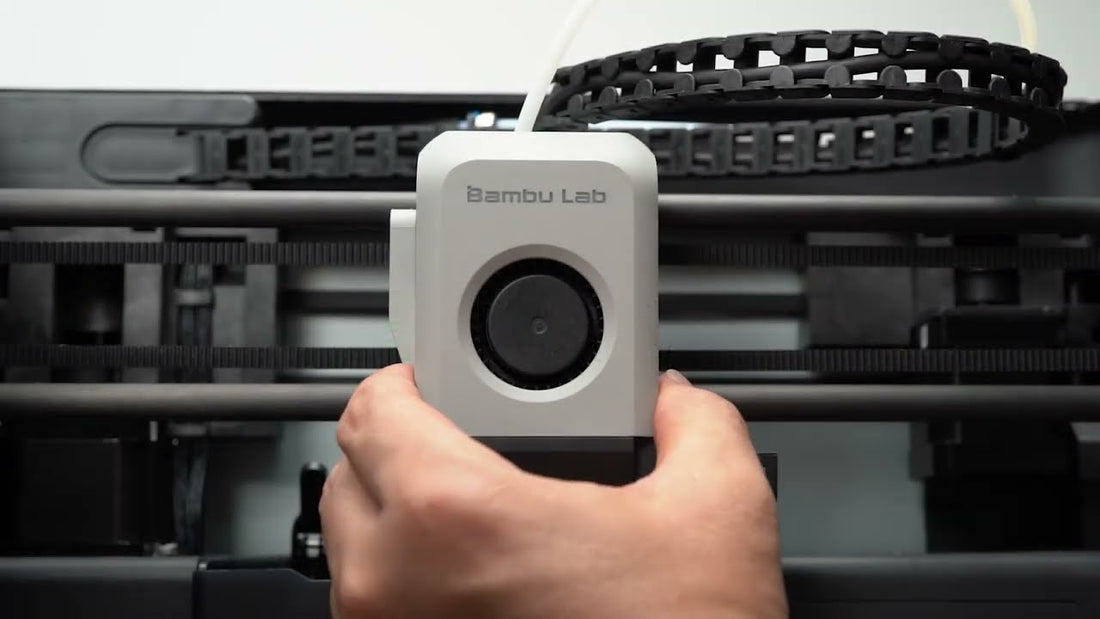
Bowden and direct-drive systems describe where the extruder motor sits in relation to the hotend. The distinction affects filament control, retraction and flexible-material performance.
Bowden extrusion
In a Bowden system the drive gears are mounted on the printer frame. Filament travels through a long PTFE tube before reaching the hotend.
Advantages
- A lighter moving print head can reduce ringing on traditional Cartesian printers.
- The hotend carriage can be mechanically simple.
Trade-offs
- The long filament path stores spring-like compression, so retraction and pressure control are less direct.
- Very flexible filament can buckle or bind in the tube.
- More retraction is commonly required.
Direct-drive extrusion
A direct-drive extruder places the drive gears close to the hotend. The short, constrained path provides more immediate control of filament movement.
Advantages
- Better control of starts, stops and pressure changes.
- Usually easier to print TPU and other flexible materials.
- Shorter retraction distances are normally required.
Trade-offs
- The toolhead carries more mass, so the printer’s motion system and input shaping matter.
- The extruder is more tightly packaged and can take longer to access for maintenance.
What this means for Bambu Lab printers
Current Bambu Lab printers use compact direct-drive toolheads. An AMS or external spool still feeds filament through PTFE tubing, but that upstream feed path does not turn the toolhead into a Bowden extruder.
- Start with the matching Bambu Studio printer and filament preset rather than importing long Bowden-style retraction values.
- For flexible filament, follow the compatibility guidance for your exact AMS model; an external spool path is often the simpler choice.
- If extrusion becomes inconsistent, check the spool, PTFE path, extruder gears and hotend before increasing retraction.
Practical takeaway: Bambu owners rarely need to choose between Bowden and direct drive—the machine is direct drive. Focus instead on a clear filament path, dry material and a calibrated filament profile.